Negativity: The Modern Mental Drug
Why does it feel like the world is ending every time you open your phone? Discover why negativity is addictive, how it distorts your reality, and why your mental state is worsening even while your daily life remains unchanged.
The Morning Dose
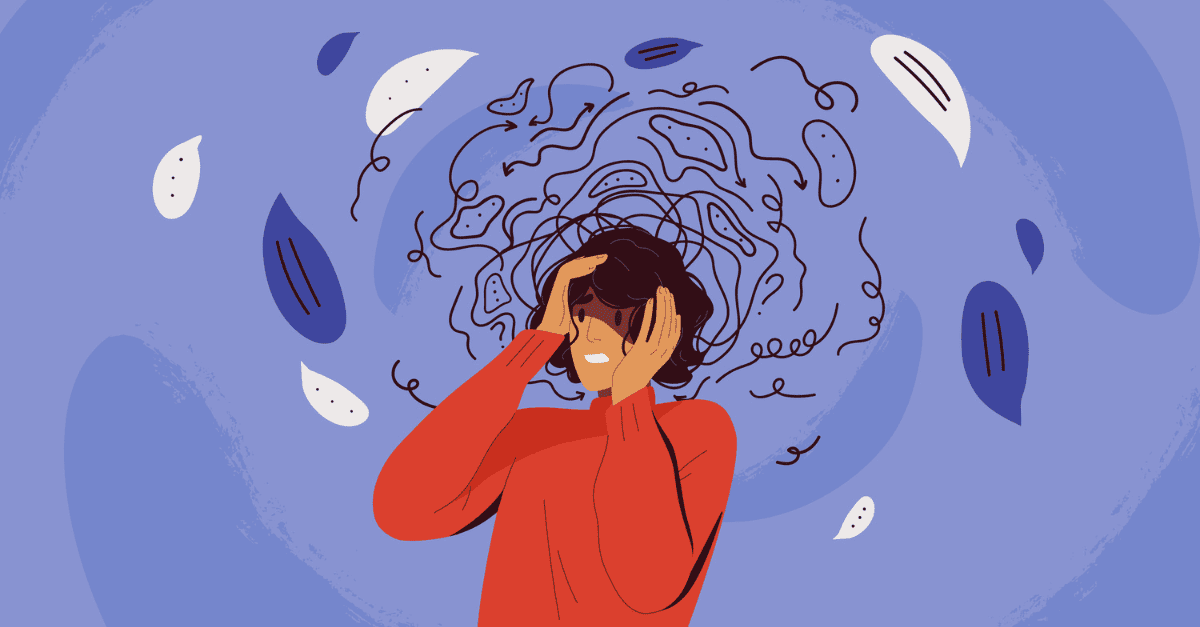
You wake up. The alarm goes off. Before your feet even touch the cold floor, your hand reaches for the phone. It’s muscle memory. You open Twitter, Instagram, or the news app. And there it is. The daily dose.
A crisis in a country you’ve never visited. An influencer cancelled for a tweet from 2014. A new economic prediction that says we’re all doomed. A friend from high school ranting about politics. You scroll. You feel a tightness in your chest. You feel heavy. You feel like the world is a dark, hostile, burning place.
But then you put the phone down. You look around. Your bedroom is quiet. The sun is filtering through the curtains just like it did yesterday. You go to the kitchen, make coffee. It smells the same. You drive to work. The traffic is the same annoying routine. You sit at your desk. The emails are the same boring requests.
Nothing in your immediate physical reality has changed. The chair holds your weight. The coffee is hot. The air is breathable. Yet, inside your head, you are living in a war zone. You are fighting battles that aren’t yours, carrying burdens that don’t belong to you, and grieving for tragedies you can’t prevent. This is the paradox of the modern mental state: physically safe, mentally under siege.
The Biology of Fear: Why You Can’t Look Away
We treat negativity like it’s information, but it’s actually a stimulant. Biologically, we are wired to pay attention to danger. Thousands of years ago, ignoring a rustle in the bushes meant death. Paying attention to the negative—the potential threat—was a survival mechanism. Optimists got eaten; pessimists survived to pass on their genes.
The Negativity Bias
This isn’t just a “bad habit.” It’s a fundamental psychological principle known as the Negativity Bias. Your brain processes negative stimuli faster and more intensely than positive ones.
Research in psychology suggests that the brain reacts to negative stimuli in less than a second, while positive stimuli take much longer to register. A study published in the Review of General Psychology indicates that “bad is stronger than good” across a wide range of psychological phenomena. We remember insults longer than compliments. We dwell on failures more than successes.
In the wild, this kept you alive. In the digital age, it keeps you enslaved.
The Dopamine-Cortisol Loop
When you see a shocking headline, your brain releases cortisol (the stress hormone). You feel alert. You feel “informed.” But then, you scroll to find a solution or a validation of your fear, and when you find a comment that agrees with you, you get a hit of dopamine.
You are caught in a chemical loop: Stress (Cortisol) -> Seek Relief -> Validation (Dopamine) -> New Threat (Cortisol). You are not reading the news; you are chemically stimulating your brain with fear.
The Business of Your Anxiety
Here is the uncomfortable truth: Your peace of mind is bad for business.
If you are content, calm, and focused on your immediate life, you are not clicking. You are not sharing. You are not commenting. Media companies, social platforms, and advertisers do not make money from a calm population. They make money from an agitated one.
Monetizing Panic
The “Attention Economy” is actually an “Outrage Economy.” Algorithms are not designed to show you the truth; they are designed to show you what keeps you on the screen. And what keeps you on the screen?
- Anger: “Can you believe what THEY did?”
- Fear: “This new threat could end everything.”
- Tribalism: “If you don’t agree with this, you are the enemy.”
A study analyzing millions of tweets found that for every moral-emotional word added to a tweet, the probability of it being retweeted increased by 20%. Anger spreads faster than joy. Lies spread faster than truth—specifically, 6 times faster, according to research from MIT.
By consuming this content, you are not just a user; you are the product. Your anxiety is the raw material they mine for profit.
The Disconnect: Virtual Chaos vs. Physical Reality
The most insidious part of this drug is the disconnect it creates. There is a massive gap between the world as presented on your screen and the world as it exists in your neighborhood. This phenomenon is known as “Mean World Syndrome.”
Coined by George Gerbner, this theory states that heavy consumers of mass media are more likely to perceive the world as dangerous and frightening, regardless of actual crime rates or safety.
The Hallucination of Danger
On the screen, everyone is fighting. Everyone is polarized. Everyone is angry. In the grocery store, people are just buying milk. They say “excuse me” when they bump into your cart. They hold the door open.
On the screen, the economy is collapsing and society is crumbling. In your office, people are just trying to get through the meeting so they can go home and watch Netflix.
When you overdose on digital negativity, you start to overlay that chaos onto your peaceful reality. You start to see enemies where there are just neighbors. You start to feel scarcity where there is sufficiency. You become defensive in a safe environment. You are hallucinating a nightmare while living in a mundane Tuesday.
The Cost of Chronic Negativity
This isn’t just about “feeling bad.” This addiction has tangible costs to your life and potential.
- Decision Paralysis: When you believe the world is ending, planning for the future feels futile. Why start a business, save money, or learn a new skill if “it’s all going to collapse anyway”? Negativity breeds passivity.
- Erosion of Empathy: Compassion fatigue is real. When you are bombarded with global tragedy 24/7, you eventually go numb. You stop caring about the people right in front of you because you are too busy mourning theoretical people on a screen.
- Physical Health: Chronic cortisol elevation destroys your sleep, weakens your immune system, and increases your risk of heart disease. You are literally worrying yourself sick over things you cannot control.
The Withdrawal and The Cure
Recognizing this as an addiction is the first step. You are not “informing yourself”; you are using. You are looking for that hit of righteous indignation or validated fear. And like any drug, it has side effects.
The cure is not ignorance; it’s perspective. It’s realizing that your mental bandwidth is finite. You have a limited amount of emotional energy to spend each day. Why spend 80% of it on global outrage that you cannot influence, leaving only 20% for your actual life, your family, your work, and your own mental health?
Practical Steps for Detox
There is no magic pill, but there are systems:
- The “No-Phone Morning” Rule: Do not touch your phone for the first 30 minutes of the day. Let your brain wake up to your physical reality before plugging into the digital matrix.
- Curate Your Feed Ruthlessly: Unfollow accounts that monetize outrage. If a source consistently makes you feel hopeless, cut it off. You don’t owe them your attention.
- Focus on “Local” Action: You want to help the world? Help your neighbor. Fix your house. Do your job well. Be kind to the cashier. These actions are real. A tweet is not.
Stop starting your day with the world’s problems. Look at your actual life. Is your house on fire? No? Then enjoy your coffee. Focus on what is right in front of you. The world will keep spinning whether you stress about it or not. Your responsibility is to your own reality, not the algorithm’s curated nightmare.

Written by Igor
Creating content about burnout, mental health, and modern challenges.
Continue Reading

Is Reading Books Still Worth It in 2026?
In an age of AI summaries, 2.5x speed audiobooks, and non-stop content, are books obsolete?

Why does everyone look successful in social media?
And you think you're the only one struggling.
Hustle Culture is Quietly Destroying a Generation
You wear your exhaustion like a medal. Here's what you're actually doing.